



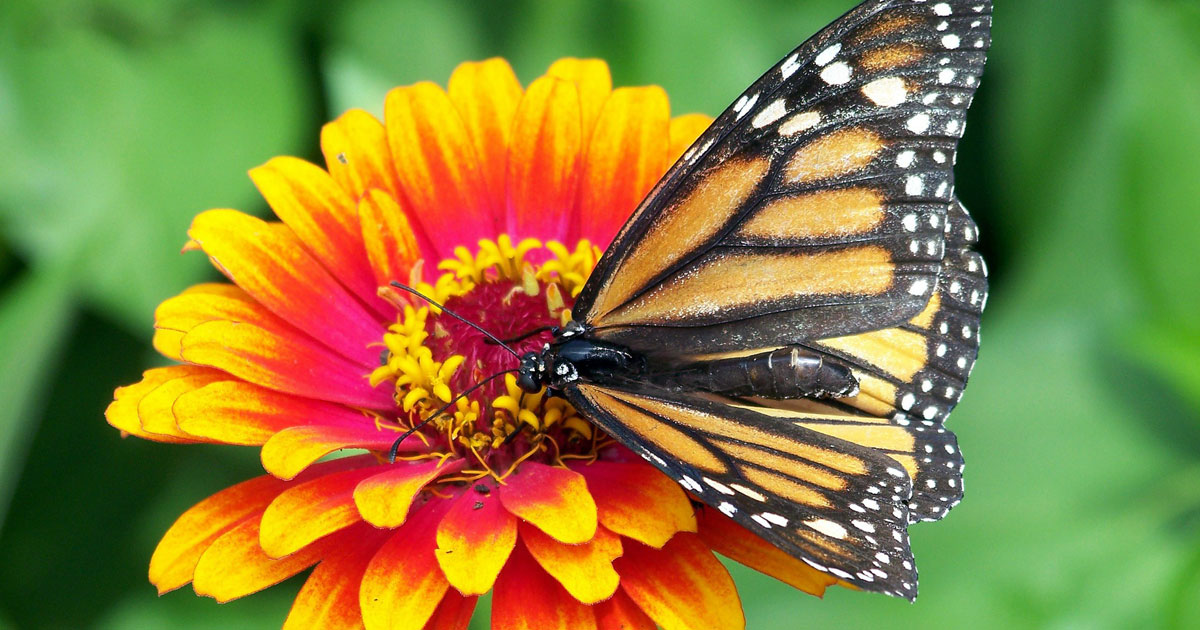
A Beginner’s Guide to Butterfly Gardening
Simple ways to create a garden butterflies will love.
There’s something magical about spotting butterflies in the garden.
Maybe it’s the way they float from bloom to bloom… or how a garden suddenly feels more alive when pollinators start showing up. The good news? You don’t need a huge yard or a perfectly planned landscape to attract butterflies.
A few thoughtfully chosen plants can turn almost any garden bed, container, or sunny corner into a butterfly-friendly space.
This guide is designed for beginners who want to support pollinators while creating a garden full of color, movement, and life.
Why Plant a Butterfly Garden?
Butterfly gardens do more than just look beautiful.
They help provide food and habitat for pollinators that play an important role in healthy ecosystems. Many butterfly populations rely on specific host plants to lay eggs and feed caterpillars, while nectar-rich flowers fuel adult butterflies throughout the season.
Plus, butterfly gardens tend to become some of the happiest, most colorful parts of the yard.
You’ll often attract:
- Butterflies
- Bees
- Hummingbirds
- Beneficial pollinators
- More blooms and garden activity overall
And honestly? Watching butterflies visit your garden never really gets old.
Step 1: Start with Sun
Butterflies love warmth.
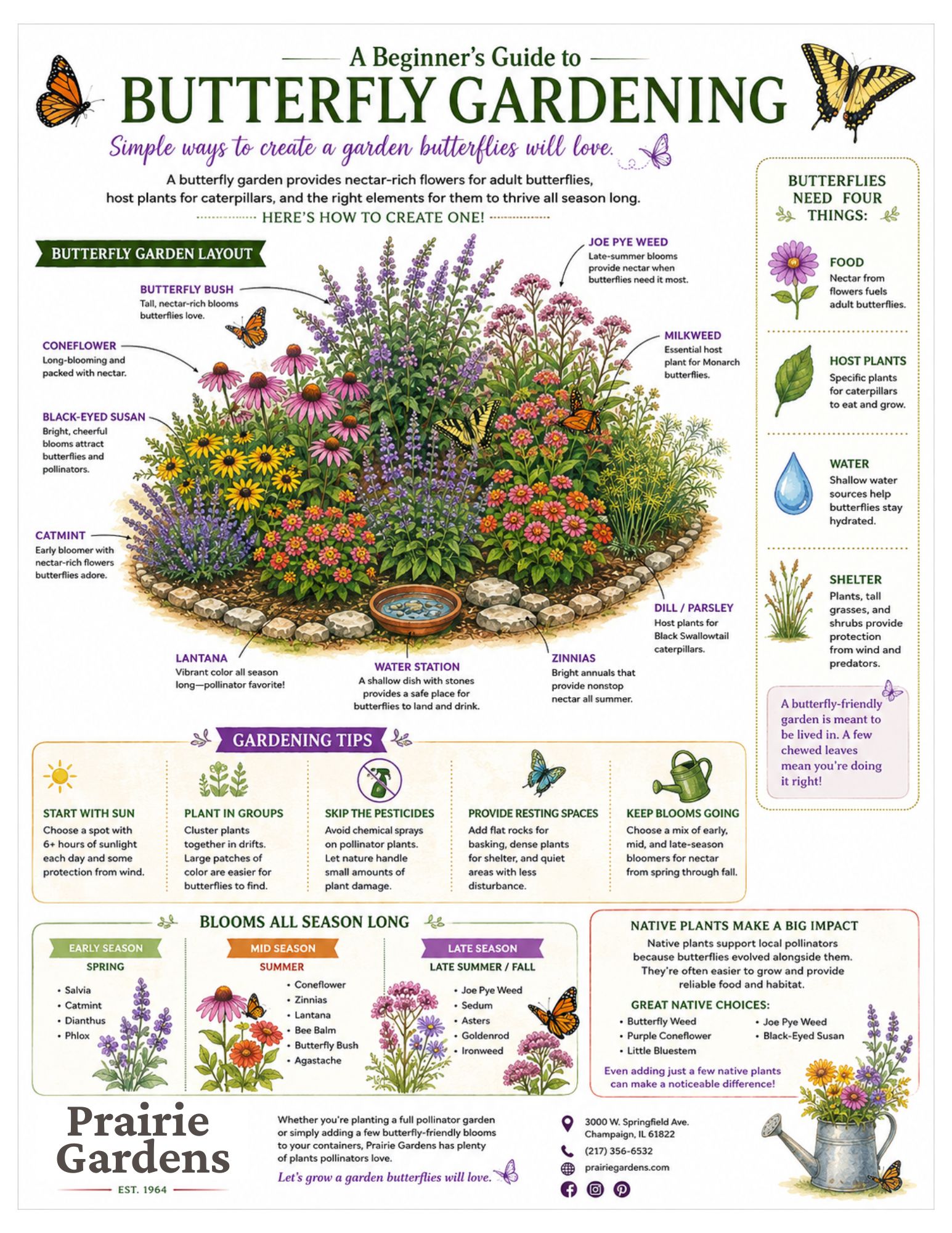
Most pollinator-friendly plants—and butterflies themselves—prefer full sun, meaning about 6+ hours of sunlight each day.
When choosing a spot, look for:
- Sunny garden beds
- Areas protected from strong wind
- Spaces near patios, windows, or seating areas where you can enjoy the activity
No large garden? Containers work beautifully too.
Step 2: Plant Nectar Flowers They Love
Butterflies are especially attracted to brightly colored, nectar-rich blooms.
Some of our favorite butterfly-friendly plants include:
- Coneflower
- Black-Eyed Susan
- Zinnias
- Lantana
- Salvia
- Verbena
- Milkweed
- Joe Pye Weed
- Butterfly Bush
- Agastache (Hummingbird Mint)
A mix of annuals and perennials works best. Annuals provide nonstop color all season, while perennials return year after year.
Tip: Plant in groups or clusters instead of single plants. Large patches of color are easier for butterflies to spot.
Step 3: Don’t Forget Host Plants
Here’s the part many people miss:
Butterflies need more than flowers.
Many species rely on specific plants to lay eggs and feed caterpillars. These are called host plants—and they’re essential if you want butterflies to complete their full life cycle in your garden.
A few important ones:
- Milkweed = Monarch butterflies
- Parsley & dill = Black Swallowtails
- Native grasses = many skipper butterflies
And yes… caterpillars will chew the leaves a little.
That’s actually the goal.
A butterfly-friendly garden is meant to be lived in.
Step 4: Skip the Pesticides
Butterflies and pollinators are sensitive to many common garden chemicals.
If possible:
- Avoid spraying insecticides on pollinator plants
- Let nature handle small amounts of plant damage
- Encourage beneficial insects instead
A few chewed leaves are usually worth the butterflies.
Step 5: Keep Blooms Going All Season
The best butterfly gardens provide food from spring through fall.
Try combining:
Early Season Bloomers
- Salvia
- Catmint
- Dianthus
Summer Favorites
- Coneflower
- Zinnias
- Lantana
- Bee Balm
Late Season Bloomers
- Sedum
- Asters
- Joe Pye Weed
This helps provide a steady nectar source throughout the growing season.
Step 6: Add Water & Resting Spaces
Butterflies need water too—but not deep water sources.
A shallow dish with stones or a damp area of soil gives butterflies a safe place to land and drink.
They also love:
- Flat rocks for basking in the sun
- Dense plants for shelter
- Quiet garden areas with less disturbance
Sometimes the smallest details make the biggest difference.
Native Plants Make a Big Impact
Native plants are some of the best choices for supporting local pollinators because butterflies evolved alongside them. They’re often easier to grow, adapted to our climate, and provide reliable food and habitat.
Some excellent native favorites for Illinois gardens include:
- Butterfly Weed
- Purple Coneflower
- Little Bluestem
- Joe Pye Weed
- Black-Eyed Susan
Even adding just a few native plants can make a noticeable difference.
Butterfly Gardening at Prairie Gardens
Whether you’re planting a full pollinator garden or simply adding a few butterfly-friendly blooms to your containers, Prairie Gardens has plenty of plants pollinators love.
From colorful annuals and hardy native perennials to milkweed, hummingbird favorites, and expert advice—we’re here to help you create a garden that feels alive all season long.
